Air Cooled Oil Cooler Not Working? Common Faults & Troubleshooting Solutions
-
Content
Introduction
Air cooled oil coolers are essential parts to keep hydraulic systems running stably. After long-term operation under complex conditions, faults like poor cooling, fan noise and oil leakage may occur. Most common problems do not need professional disassembly. This article sorts out typical faults, causes and easy solutions for daily maintenance.
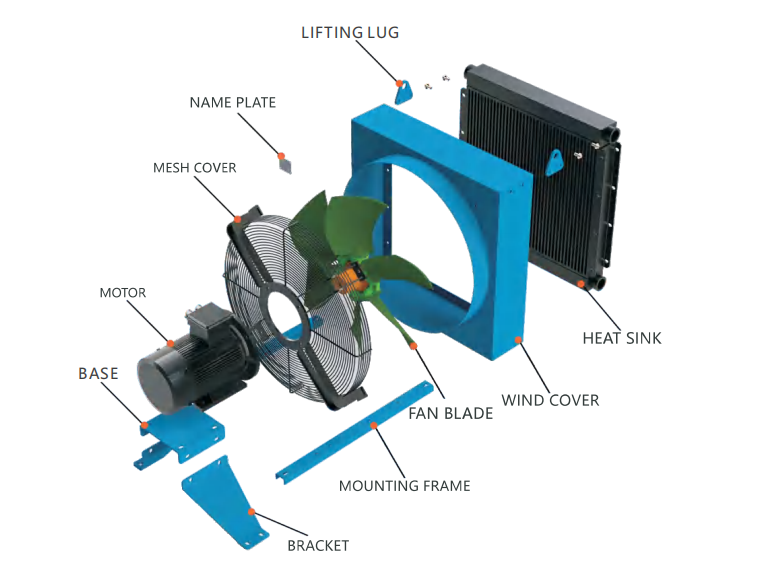
The fan is running but cooling performance is poor
This is the most common issue. The cooler fan is running, but there is almost no hot air coming out of the outlet when you touch it, and the oil temperature continues to rise.
Solution:
1. Check if the air intake is blocked
When the oil cooler is installed in dusty environments (such as mines or construction sites), the cooling fins can easily become clogged with dust and oil sludge. Shine a flashlight into the gaps between the fins; if you see significant dust buildup, cleaning is required.
2. Cleaning method
First, use compressed air to blow from the inside out (in the opposite direction of the air intake)
If sludge buildup is severe, use a neutral detergent and a low-pressure water gun to rinse.
Note: Do not use a high-pressure water gun, as this may bend the fins.
3. Check fan rotation direction
If the wiring of a three-phase motor fan is incorrect, it may rotate in the opposite direction. Simple test: Place a strip of paper at the air outlet; if the paper is drawn toward the cooler instead of being blown away, the fan is rotating in the wrong direction. In this case, simply swap any two power supply wires.

Blockage in the Cooler’s Internal Oil Path
The return oil pressure in the hydraulic system has risen significantly (pressure gauge reading exceeds 8 bar); the surface temperature of the cooler is very low in some areas, but extremely hot near the inlet.
Solution:
1. Determine if there is a blockage
Install a pressure measurement point at both the cooler’s inlet and outlet. The normal pressure differential should be less than 3 bar. If the pressure differential exceeds 5 bar, it is highly likely that there is an internal blockage.
2. Common causes of blockage
Gummy deposits from aged hydraulic fluid
Metal debris from internal system wear
Large particles of contamination from a damaged filter element
3. Remedial Actions
Temporary fix: Reverse flushing (inject clean oil through the outlet; ensure pressure does not exceed 5 bar)
Permanent solution: Remove the cooler, disassemble and clean it, or replace the heat exchange core directly
It is also essential to inspect the return oil filter and the oil cleanliness; otherwise, blockage will recur.
Oil Leakage at Joints & Welds
Long-term vibration and aging sealing rings are the main causes of oil leakage. The problem will become worse when the system runs under high pressure.
Solutions: Replace aging gaskets regularly, inspect welds for cracks, and select high-pressure resistant models for heavy-duty working environments.

Oil temperature remains too high, but the cooler is functioning normally
The cooler itself is not faulty; the fan is working properly, the fins are clean, and there are no leaks, yet the system oil temperature remains too high.
Solutions
1. Is the cooler undersized?
Review the sizing calculations: Does the actual heat generation exceed the cooler’s rated heat dissipation capacity? If so, replace the cooler with a larger model or install an additional unit in parallel.
2. Is the ambient temperature too high?
During hot summer weather, the cooler is already drawing in hot air at 40°C, which naturally reduces heat dissipation efficiency. Consider improving ventilation or switching to a cooler with water mist-assisted cooling.
3. Is there abnormal heat generation within the hydraulic system?
Conditions such as a constantly open relief valve, severe internal leakage in the oil pump, or excessive throttling in the piping can all generate additional heat. Each hydraulic component must be inspected individually.
Daily Maintenance Suggestions
Regular inspection is the best way to reduce faults and extend service life. Simple cleaning and circuit checking every week can avoid most minor problems. If you encounter a complex problem or need to replace parts, please [contact us] for professional technical support and product solutions.
#CoolerTroubleshooting #HydraulicMaintenance #AirCoolerRepair #IndustrialEquipment #CoolingSystem #MachineMaintenance