Industrial Oil Cooler: Working Principle, Features & Benefits | Dongxu Hydraulics
Learn how industrial oil coolers use heat exchange to maintain hydraulic oil at 40-55°C. Features include imported brand compressors, real-time temperature monitoring, and multiple protection functions.
-
Content
Unveiling the Oil-Cooled Machine
Within the vast system of industrial production, many pieces of equipment generate significant amounts of heat during operation. If this heat is not dissipated promptly, the equipment can experience various issues—much like a person with a fever—such as decreased performance, reduced precision, and even potential damage, which can severely impact production continuity and product quality. Oil coolers, much like “dedicated air conditioners” for industrial equipment, shoulder the critical responsibility of cooling and dissipating heat from these machines, serving as a vital link in ensuring the stable operation of industrial production. So, what exactly makes this industrial “guardian” so unique that it holds such an important position in the field of industrial cooling? Let’s take a closer look at the features of oil coolers.
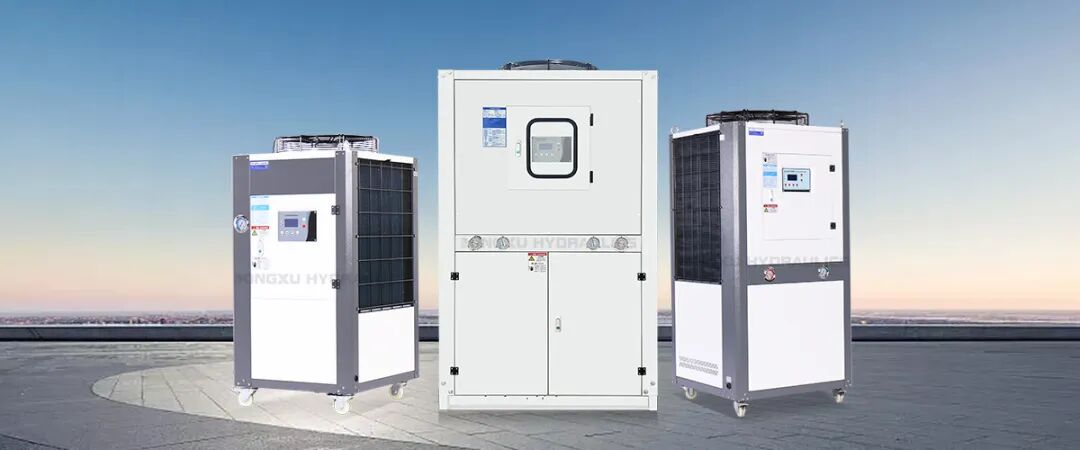

Features of the Oil Cooler
It offers two control modes: constant temperature and room temperature synchronization, allowing users to select the appropriate option based on their actual needs.
It features multiple protection functions and provides dry contact alarm terminals, enabling real-time fault alerts that can also be integrated into industrial monitoring systems.
It provides real-time temperature monitoring, with early warnings and alarms for excessively high oil temperatures, as well as alarms for excessively low oil temperatures, thereby maintaining the oil’s viscosity characteristics and ensuring stable machine operation.
The main unit utilizes imported, brand-name compressors from Europe, the United States, and Japan, ensuring reliable operation, high efficiency, and low noise levels.
The imported oil pump delivers high pressure, exceptional stability, and long-lasting durability.
The imported digital controller offers high precision and a wide range of applications.
It prevents changes in oil temperature from affecting the precision of machinery during operation.
It prevents oil degradation due to high temperatures, maintains consistent oil viscosity, and ensures stable operation of machinery.

How Oil Coolers Work
Oil coolers operate based on the physical principle of heat exchange between hot and cold media. During operation, high-temperature hydraulic oil and lubricating oil flow at high speeds through the internal channels of the cooler. Simultaneously, air or cooling water is used as the heat transfer medium. Through heat exchange components such as highly thermally conductive metal plates, copper tubes, and fins, the residual heat within the oil is rapidly transferred to the external medium and dissipated. The cooled oil is then recirculated back into the hydraulic system, thereby maintaining the system oil temperature within the optimal operating range of 40–55°C.


Applications of Oil Coolers
Oil coolers are widely used in a variety of fields, including high-speed punch presses, electrical discharge machining (EDM) equipment, internal and external grinding machines, hydraulic presses, CNC machine tools, deep-hole drilling machines, lubrication stations, and hydraulic machinery. Regardless of the industrial setting, whenever equipment requires cooling, oil coolers can provide effective solutions for fluid cooling thanks to their outstanding performance!