How Does a Hydraulic Air Cooler Work? | Dongxu Hydraulics
A deep dive into hydraulic air cooler technology. Understand how aluminum alloy plate-fin cores with forced convection achieve stable 24/7 cooling for mining, construction, and industrial equipment without water supply.
-
Content
Introduction: What exactly does it do?
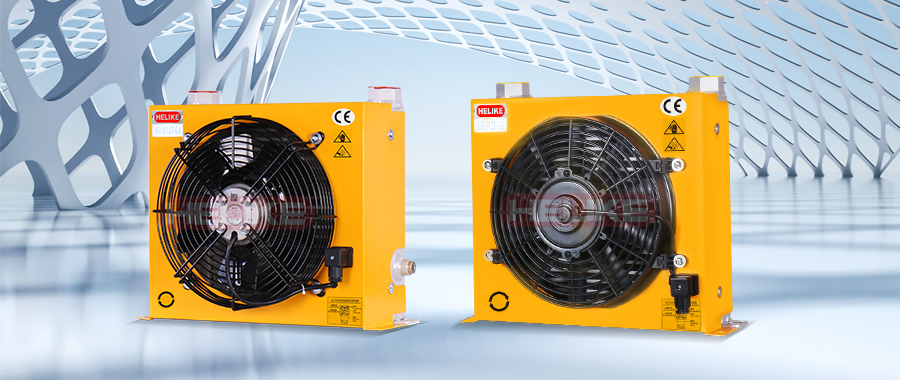
Imagine you’ve just finished a 5K run on a 40°C summer day. What do you want most? A cool breeze. An Air cooler is the “breeze” of the hydraulic system. It uses air as a cooling medium to forcefully remove excess heat from hydraulic fluid or lubricating oil. The design is simple: an aluminum alloy plate-fin core + a fan (driven by an electric motor or hydraulic motor). Oil flows through the core, and the fan blows air forcefully against it, carrying the heat away. No water pipes or cooling towers are needed—just plug it in and it gets to work.
Features of the Air Cooler
1. No reliance on water cooling, completely eliminating common issues such as scale buildup, blockages, aging water pipes, and freeze-related cracks; suitable for various outdoor operating conditions where water supply is unavailable;
2. Compact and lightweight design, supporting multiple installation methods including floor-standing and wall-mounted configurations, making it ideal for tight installation spaces;
3. Utilizes a high-precision aluminum alloy vacuum brazing process, resulting in strong overall pressure resistance, shock resistance, and dust resistance, enabling stable operation in complex and harsh environments such as mines and construction sites;
4. Easy and hassle-free maintenance—simply clean dust from the fin surfaces periodically to maintain efficient heat dissipation, significantly reducing long-term maintenance costs;
5. Uniform and stable heat dissipation supports 24-hour continuous start-stop operation of equipment, effectively ensuring the stability and smooth operation of hydraulic systems.

How Air Coolers Work
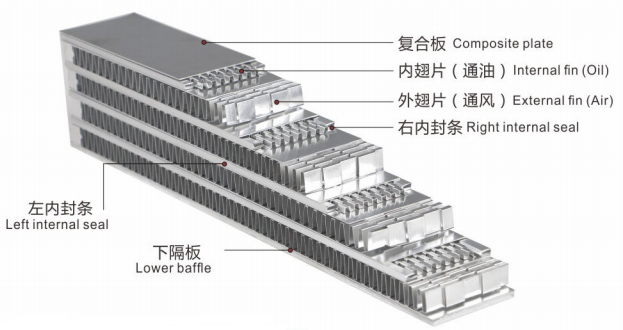
Hydraulic air coolers operate on the principle of forced convection heat transfer. High-temperature hydraulic oil flows through the internal channels of a high-density aluminum alloy heat dissipation core, while a axial fan continuously draws in ambient air, which flows at high speed across the heat dissipation fins and the walls of the oil pipes. Heat exchange occurs through the metal medium, with heat from the oil rapidly carried away by the flowing air. The cooled hydraulic oil then returns to the hydraulic system to continue circulation. This fully automated, constant-temperature cooling process continuously suppresses system temperature rise.

Applications of Air Coolers
Air coolers are widely used in various hydraulic equipment applications where water is scarce, or where outdoor or mobile operations are required. These applications primarily include construction machinery, mining equipment, injection molding machines, CNC machine tools, hydraulic balers, industrial air compressors, and small-to-medium-sized hydraulic power units. They are the preferred choice for hydraulic cooling in field construction equipment, open-air units, and industrial sites without a water supply.
In short: Whenever equipment is mobile, water-scarce, or susceptible to freezing, the air-cooled heat exchanger is the solution.